
When Dialogue Falls Silent
Micro lessons in craft, prompts to explore silence, and opportunities to deepen your writing practice

01/06/26
Thank you, as always, to our dear Paid Subscribers and our friends at Stonecoast MFA. We want you to know how glad we are to be part of your lives. Our next event, the TPOW Open Mic, is happening January 13 - 7 pm EST and will be hosted by editor of @typebarmagazine, Matt Saccaro.
Click here to sign up!
Open to ALL
Hello Writers!
Welcome to TPOW’s Weekly Edition.

“Happy birthday, friend of my heart,” she said.
“It was happy. It is. That opera changed me.”
“I thought it would,” she said. “I’m glad it did. You were getting to be kind of a drag.”
Spectacular burst of grapefruit as the sun burned itself out. They watched it on their veranda with another bottle of champagne. He picked God up and kissed her on the crown. He wanted to dance, and so he went in and put on Radiohead and swept Mathilde out of her chair with his strong side and pulled her to him.
“Let me guess,” Mathilde said, her cheek on his shoulder. “Now you want to write an opera.”
(Fates and Furies, Lauren Groff, p. 114)
Dialogue and Its Absences: Silence, Aftermath, and Echo
Writers are often encouraged to focus on the quality of dialogue itself: how it sounds, how closely it mimics speech, how distinct each voice feels on the page. We pay careful attention to rhythm, diction, interruption, cadence. We revise for sharpness and clarity. But some of the most powerful work dialogue performs happens outside the spoken line. Meaning often arrives not through what is said, but through what follows. Or through what never comes at all.
Silence is not empty space. It is an active narrative choice, one that carries emotional weight precisely because it resists articulation. When dialogue is followed by silence, the reader is invited to linger in uncertainty. That uncertainty can hold more tension, more truth, than explanation ever could.
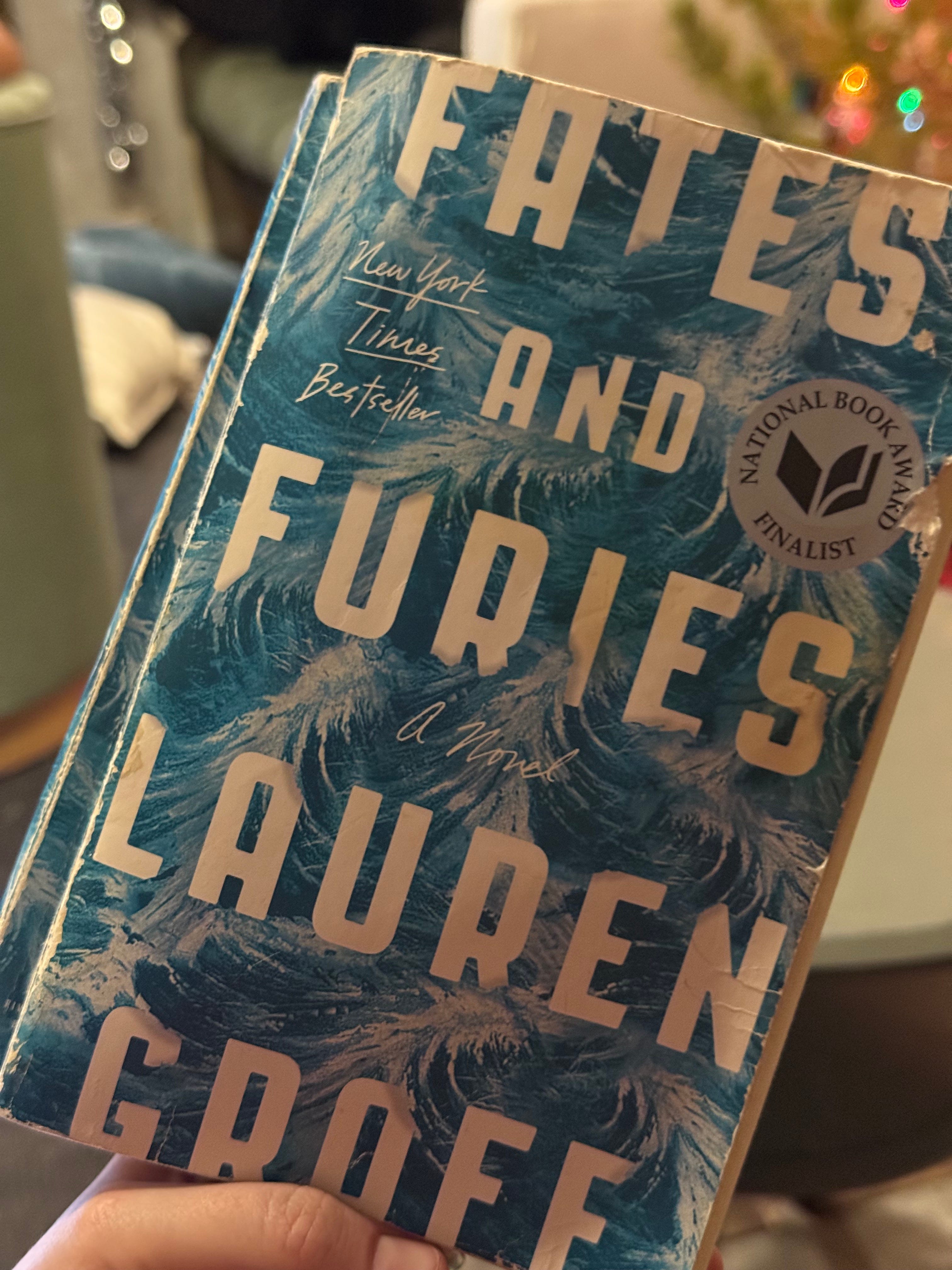
I use Fates and Furies as my primary example because Lauren Groff does this with remarkable precision, showing how much of what passes between Lotto and Mathilde is never spoken. Their intimacy is built not only through dialogue, but through what two people who share a life no longer need to say.
“Cuts a little close to the quick,” Mathilde said, looking up. She wore sadness at the corners of her mouth.
“You’ll meet my mother someday,” Lotto said. “Just want you to be prepared. She still asks when I’m going to settle down with a nice girl.”
“Ouch,” Mathilde said. She looked at him over the table, coffee and bagel, half eaten. “Pathological truth-teller?”
He looked at her. Waited.
“Okay,” she conceded.
(Fates and Furies, Lauren Groff, p. 89)
Aftermath: Where Meaning Arrives
This is where silence becomes most legible on the page. Emotional turning points in fiction often occur after a line of dialogue rather than within it. A character makes a confession. Another character does not respond. The scene shifts. The lack of reply becomes the moment’s center. The reader understands that something irreversible has occurred, not because it is named, but because speech has failed.
“I think the play is funny,” Mathilde said.
“It is funny,” Lotto said. “The whole audience was cracking up.”
“Phoebe Delmar. Five plays, five pans. The woman knows nothing,” Mathilde said.
They looked at each other, started to smile.
(Fates and Furies, Lauren Groff, p. 90)
The emotional reverberation that follows a line of speech can deepen character, sharpen stakes, and create resonance that extends beyond the page. When writers rush to fill that space with reaction or clarification, they often dilute the force of what has already been established. Dialogue followed by explanation tells the reader what to feel. Dialogue followed by silence asks the reader to participate in meaning-making.
That act of inference creates intimacy. The reader is no longer a passive recipient of information but an active collaborator, listening not just to what is spoken but to what lingers.
Structure: Making Space for Silence
Silence on the page is shaped by structure. A paragraph break following a charged line of dialogue gives the moment room to breathe. A scene that ends without commentary allows the final line to echo forward. These choices are not merely aesthetic. They are narrative decisions that shape how the reader experiences time, emotion, and consequence.
This is especially true in short forms, where economy heightens impact. In flash fiction and short stories, aftermath often carries disproportionate weight. A single line of dialogue placed at the end of a piece can reframe everything that came before it, not because it explains, but because it withholds.
In these moments, white space functions as restraint. It slows the reader down. It invites reflection. It allows the emotional pressure of the scene to remain unresolved in a way that feels intentional rather than incomplete.
Groundwork: What Silence Requires
Silence only works when the groundwork has been laid. Withholding response or resolution without sufficient context risks confusion rather than resonance. The reader must understand what is at stake in order to feel the absence meaningfully.
Silence is not a substitute for clarity. It is a refinement of it. This does not mean over-explaining or naming emotion directly. Often a single, well-placed line is enough to orient the reader emotionally. What matters is that the scene has earned its quiet.
In revision, this often means subtracting rather than adding. The more effective move is sometimes to remove the final explanatory gesture altogether.
One of the most useful revision questions a writer can ask is not “What should be said here?” but “What happens if nothing is said?” If the scene collapses without explanation, something essential may be missing. If the scene deepens, the silence is doing its work.
“You don’t get married at twenty-three because you had a bad year,” Lotto said.
“Why do you get married at twenty-three, Lotto?” Rachel said. “Pray tell.”
“Touché,” Mathilde murmured. Lotto looked at her. “Actually, we were twenty-two,” she said.
(Fates and Furies, Lauren Groff, p. 91)
Dialogue is not only about speech. It is also about what speech cannot contain. In moments of emotional intensity, language often falters. Fiction that honors this limitation feels truer, not less articulate. It mirrors how people actually experience loss, rupture, and transformation: through pauses, interruptions, and unfinished thoughts.
Sometimes the most honest line of dialogue is the one that never arrives.

Prompt: After the Line Is Removed
Write a short scene built primarily from dialogue.
Include a moment where one character expects a response.
In revision, remove one line of dialogue. Do not replace it with another spoken line.
After removing it, choose one of the following:
• Let the absence remain as white space, allowing the emotional weight to hold in silence.
• Let the pressure move into the scene by replacing the missing line with an action, gesture, or detail from the room.
Do not explain what the missing line would have said. Let the scene communicate through absence or displacement.
Keep the version where the removal creates the most resonance.
If you do end up writing something as a result of this, submit it to us:
We’d love to read it.
Stories We’re Following: Creative Writing News
Prize & Publication
Stonecoast’s very own Jen Dupree (Fiction, W’15) has had her short story “Watch,” recently published in Slippery Elm, nominated for a Pushcart Prize. Jen is a writer, teacher, librarian, former bookstore owner, and freelance editor with an MFA in Creative Writing from Stonecoast. Her fiction and essays have appeared in Front Porch Review, The Masters Review, On the Rusk, and other journals, and she has received honors such as the Writer’s Digest Fiction Contest and Maine Literary Awards.
Craft & Industry

My mother sent me a link to Colin O’Brady’s The Twelve Hour Walk, and even though I’m probably late to the game and haven’t read the book, it immediately pulled me back to my time walking through New Zealand alone. I used to do this almost every day — full days without talking to anyone, aside from the occasional coffee order. Mostly I was just walking, reading, writing, sipping said coffee, biting into an apple, sitting on a concrete bench off the side of a trail just beyond the main road, sweating amongst ferns and trickling streams.
It made me think about what it would mean to do something like this in our own towns. I wonder if the hesitation lives only in me. Silence feels easier in places we don’t yet know, where walking without talking becomes a way of learning the terrain. But how often do we assume we already know more about where we live than we actually do? Especially with how much we rely on our devices and online platforms, this kind of attention could be genuinely life-saving for a lot of people.
I wrote a note about it earlier this week, because I feel a deep pull toward the idea of O’Brady’s 12-hour walk. And at the same time, it gives me pause that I’m trying to schedule silence, as if it needs permission or a container before it’s allowed to exist.
Quick relatable side note. Did y’all know about THIS? in a 2014 Science study researchers found that people would rather voluntarily shock themselves than sit with their own thoughts for 15 minutes. There’s some kind of sick horror living in that discovery.
Literary Gossip / Inspiration
I was reading National Geographic and fell down a rabbit hole about undeciphered ancient writing systems. Pretty cool how much meaning scholars can pull from fragments and repetition, even when the language itself remains out of reach. Kind of like making meaning out of the dialogue gaps, no?
Upcoming at TPOW: Learning & Community
Thursday Flash Club — Weekly on Substack Live, starting this Thursday, January 8th!
- Prompts, mini craft lessons, and community.
- Keeps us writing, talking, and trying new things.When Place Has Agency: Setting & Space in Fiction — Begins April 1
- Four week class on writing setting as an active force in fiction.
- Learn to use atmosphere, texture, and spatial tension to shape story.Shifting Perspectives: Mastering Point of View in Fiction — Begins April 2
- Four week class exploring First, Second, Close Third, and Omniscient.
- Perfect for experimenting with new narrative possibilities.Writing With Your Whole Nervous System — Begins May 6
- Four week class on embodiment, sensory detail, and emotional truth.
- Learn to write scenes that feel inhabited, grounded, and alive.Writing the Wild: Lyric Non-Fiction — Begins May 7
- Write from the elements: wind, water, wilderness.
- A generative class on lyric movement and the untamable.
Stonecoast Enrichment Series
TPOW Open Mic — January 13 - 7 pm EST
Hosted by editor of @typebarmagazine, Matt Saccaro.Click here to sign up! Anyone can!
World Building — February 10 - 7 pm EST
Explore bottom-up, top-down, and goal-oriented worldbuilding with Lucas Carroll-Garrett, and learn how each approach shapes depth, tone, and narrative focus.Your Body, Your Story — March 10 - 7 pm EST
Nina B. Lichtenstein dives into the body as memory archive through sensory prompts. Learn how physical experience transforms forgotten moments into vivid scenes.Writing Words into Life! Elements & Techniques of Basic Scriptwriting — April 14 - 7 pm EST
Develop dialogue, explore the playfulness of scripts, and rediscover fun in storytelling with Adam Rodriquez-Dunn.
The Silence is Listening,
Leah (& Nina)