

Dear Pantsers,
We have to talk about finishing the story.

04/07/2026
Dear Panters,
We have to talk about finishing the story. You are my family of origin, and I am devoted to you above all others, but here in this series of ego blows I call writing, I have discovered another who is very helpful, his name is Structure. I have turned my nose up at him, looked through him, or around him for years because of my [insert reasons here: dyslexia, busy life, intellectual laziness, low self-esteem, oppositional defiance disorder, my dances with the -isms, social media, etc…].
If I’m being honest, which I mostly am. I’ve had a lingering feeling [known] that structure is my greatest weakness as a writer. How could I not? Let me describe my process: I write, rarely knowing where I am going, until I stumble upon a voice or scene that feels alive, then I follow that heartbeat. Then I go back and look at what I’ve written to figure out what I’m really saying and cobble the story together. It’s all very retroactive and reverse. I’m dyslexic. But also…so are many of us.
But my process is joyful and surprising, which, if you’ve read my writing, is the true heart of my work. I love to surprise myself…
But an outline feels like a garrote to my creativity.
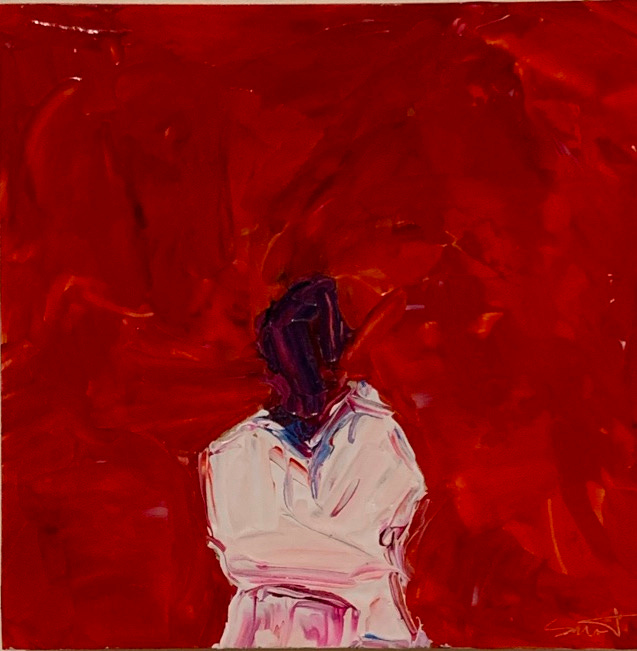
But revision is a nightmare. It’s like painting a portrait in the dark and then turning the lights on to see what I’ve created and then fixing the painting as best as I can. This actually works sometimes. Some editors love the stray lines and out-of-place eyeballs and the unbridled enthusiasm on the page, but most come back with…We love it, but something isn’t quite right.
They can’t even always name it. But I know what it is—it’s my ghost, Structure. He is drifting in and out moaning the only word he knows…. “structure.”
I know what makes a story jump off the page. It’s when there is a symbiosis of form, structure, and narrative content that works together and forms a gestalt—that magic where the effect is greater than the sum of its parts. I can see it. Anyone who has ever read a story or watched a movie over and over. They see it, too.
So if we are to achieve this gestalt, we must dig in and find our own ways to incorporate structure.
I recently listened to the Always Choose Orange podcast, where the author Henry Lien talked about his use of the East Asian four-act structure and how the architecture of a story must work in tandem with the content. He used the metaphor of building a cathedral and how the foundation is always in the shape of a cross, and how every choice thereafter is made with the cross in mind. There are always four stations, and without them, it will not work as cathedrals are intended to work.
Why do I say this? I have five stories in the queue that are vibrant and compelling, and yet I cannot seem to finish them. (Can you hear my moaning ghost?) At the moment they need to condense, they resist me and send me into a traffic circle with fifteen different exits. Their richness is actually great, because the reader can see, wow, this is like life—any path taken here means leaving fourteen viable options behind.
Meaning, my stories, at this point, could be saying any number of things about life, but as the writer, I have to choose. I have to choose which way the story goes. But how?
At this point, I say, let’s turn the lights on and look at this painting.

Dear Lord. OK.
Revising isn’t just about making great sentences, killing your passive voice, and eradicating shitty verbs, it’s also about closing doors to potential outcomes. These closures make sense when the content reacts to a story’s natural boundary.
So if I’m telling a Cathedral story and I create a tangent that isn’t in the name of the Father, and of the Son, and of the Holy Spirit and how they move within me, well…I should consider not including that tangent, right?
It seems obvious, except when you’re in it.
The story shape creates restraints that actually help build tension toward inevitability. Trust it..or at least try trusting it.
Here are four of the most common shapes: Funnel. Accumulation. Spiral. Field (my nemesis).
In funnel-shaped stories, doors close on the character until there is only one possible outcome. Think about the movie Jaws. Will they get the shark and save the people? Boom. That’s it.
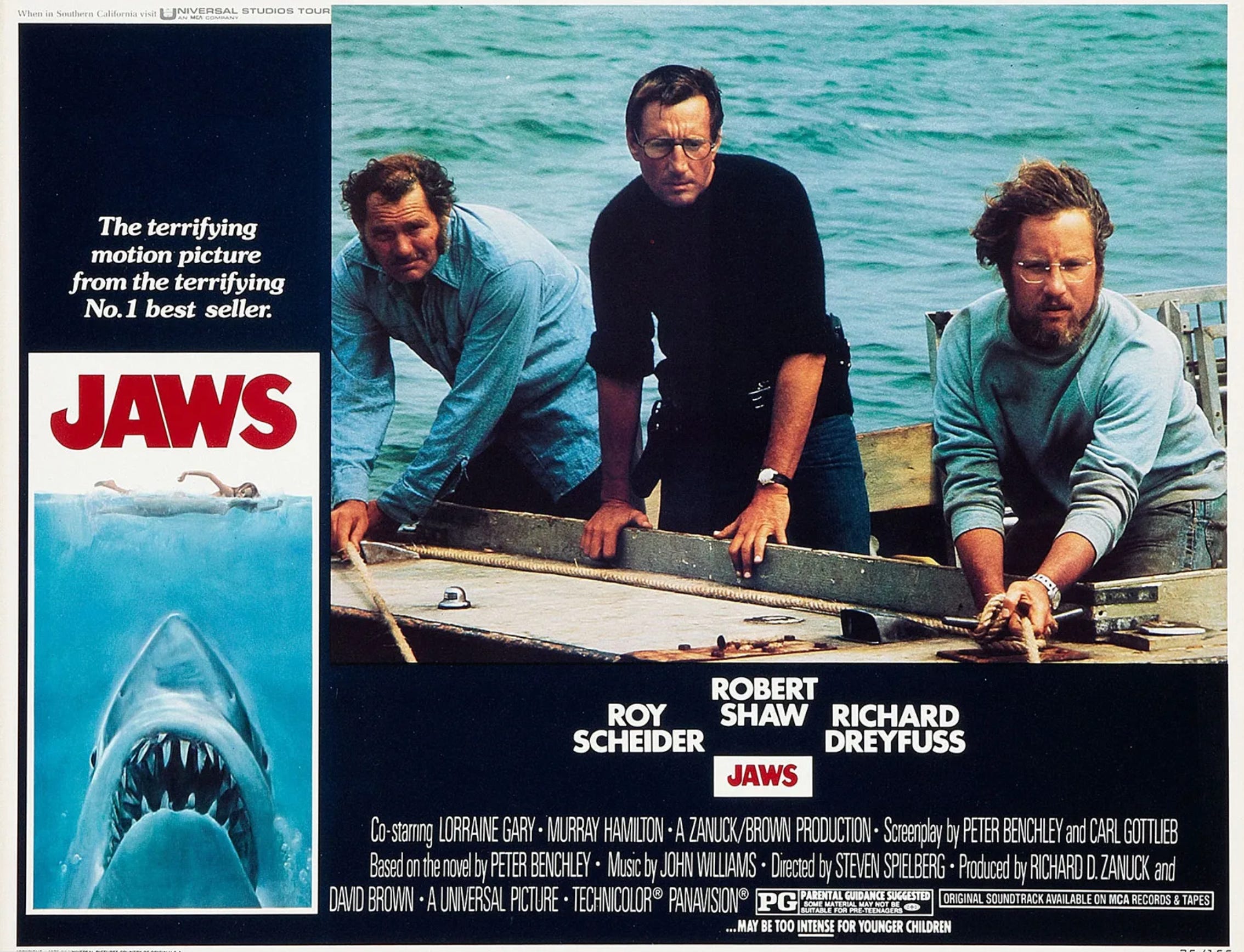
ok. why this movie was PG I will never understand. It has terrorized me my entire life.
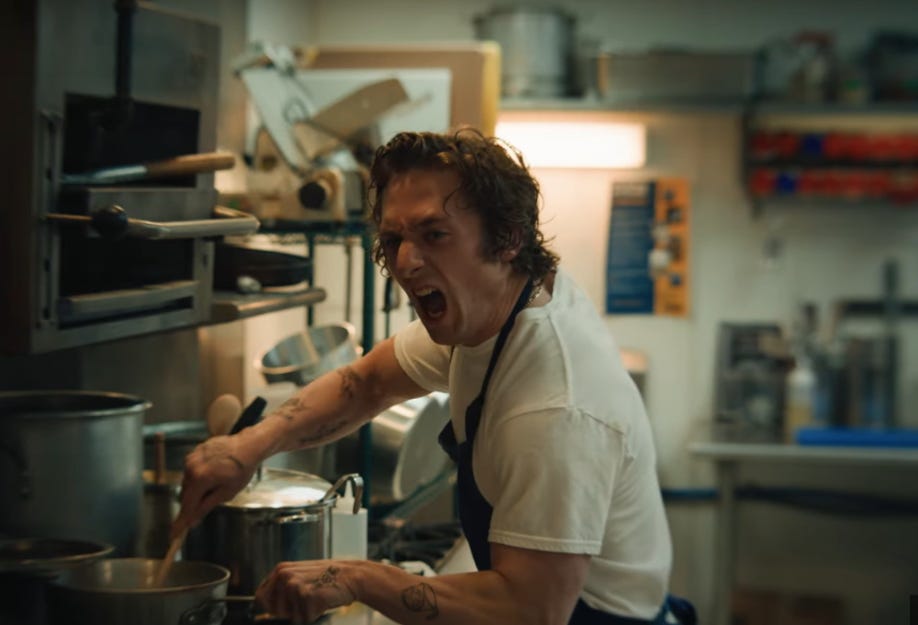
In accumulation stories, brick after brick gets piled on until the character topples. This would be The Bear’s “Review” episode (my favorite, but also I need a drink after because it reminds me of midlife and my restaurant life)—the online orders turn on, tickets start printing, they don’t stop, mistakes compound, tempers rise, systems fail, and people fracture. Every attempt to fix the problem creates more problems.
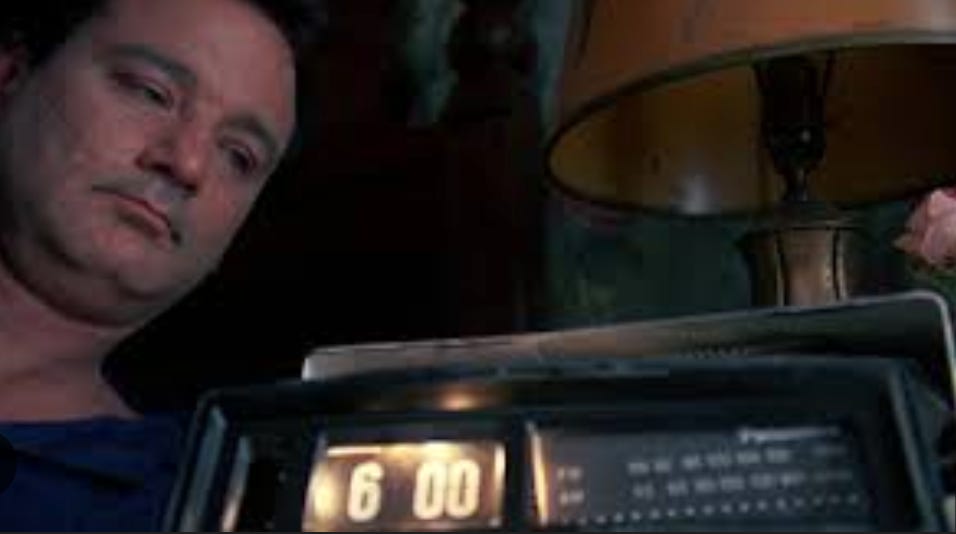
In spiral stories, we circle back to the same place (emotional, physical, spiritual), but the character is different each time. Take Groundhog Day—how many times does Bill Murray have to repeat the same day until he changes?
In field stories, instead of following a chain of events, it gathers moments that all point to the same underlying condition. Here I think about Lost in Translation (yes, I know I have two Bill Murray movies here), which is a collection of individually fumbling portraits that forms into a mosaic telling us—we are all lost, together.
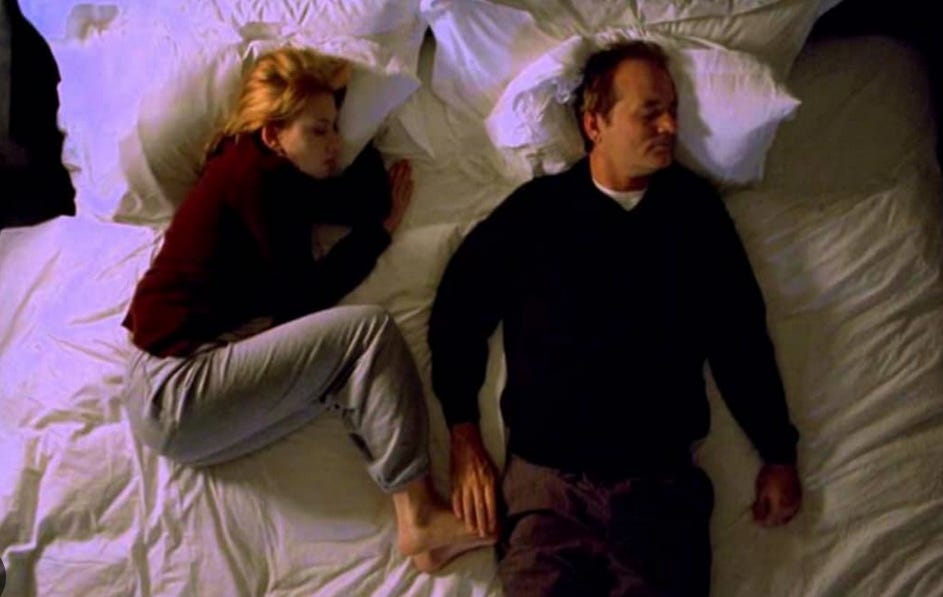
So, the shapes of these stories dictate their outcomes, and if your story is floundering and you don’t know how to finish it—look first to the shape of your story. Chances are, you haven’t chosen what kind of story it is. And if you haven’t chosen…choose. As George Saunders says (massive paraphrase alert 🚨) all we have is the choosing and it’s what makes our stories unmistakably our own.
xo,
Nina
Prompt:
Look at your own unfinished story and examine what is happening, go line by line if you have to.
Just do it.
Determine the shape of your story. Name it. Claim it. Say it.
Now go back and ask each sentence, each paragraph, if it belongs to the shape? If it doesn’t…discard or rework.
Repeat until that bad boy is finished.
Then hit submit.
Celebrate.
Upcoming at TPOW: Learning & Community
Thursday Flash Club — Weekly on Zoom — Thursdays at 5 PM PST/ 8PM EST!
- Prompts, mini craft lessons, and community to keeps us writing, talking, and trying new things.
Stonecoast Enrichment Series
Writing Words into Life! Elements & Techniques of Basic Scriptwriting — April 14 - 7 pm EST
Develop dialogue, explore the playfulness of scripts, and rediscover fun in storytelling with Adam Rodriquez-Dunn.Folk Horror and Story Structure — May 12 - 7 pm EST
We explore folk horror as a storytelling framework with Andrea Adams.